

The Overview Effect
Artemis Reminds Us Of A Forgotten Spiritual Truth

I have been deeply moved by the Artemis II mission to the moon. And because I am the son of a literal rocket scientist, I grew up with a deep love and appreciation for the space program. One of the stories told by Astronaut Rusty Schweikart has been a favorite of mine for years, and I’ve have been thinking about it a lot this week.
This seems a good week to dust off this story, and share some of NASA’s remarkable new pictures, while I tell this story.
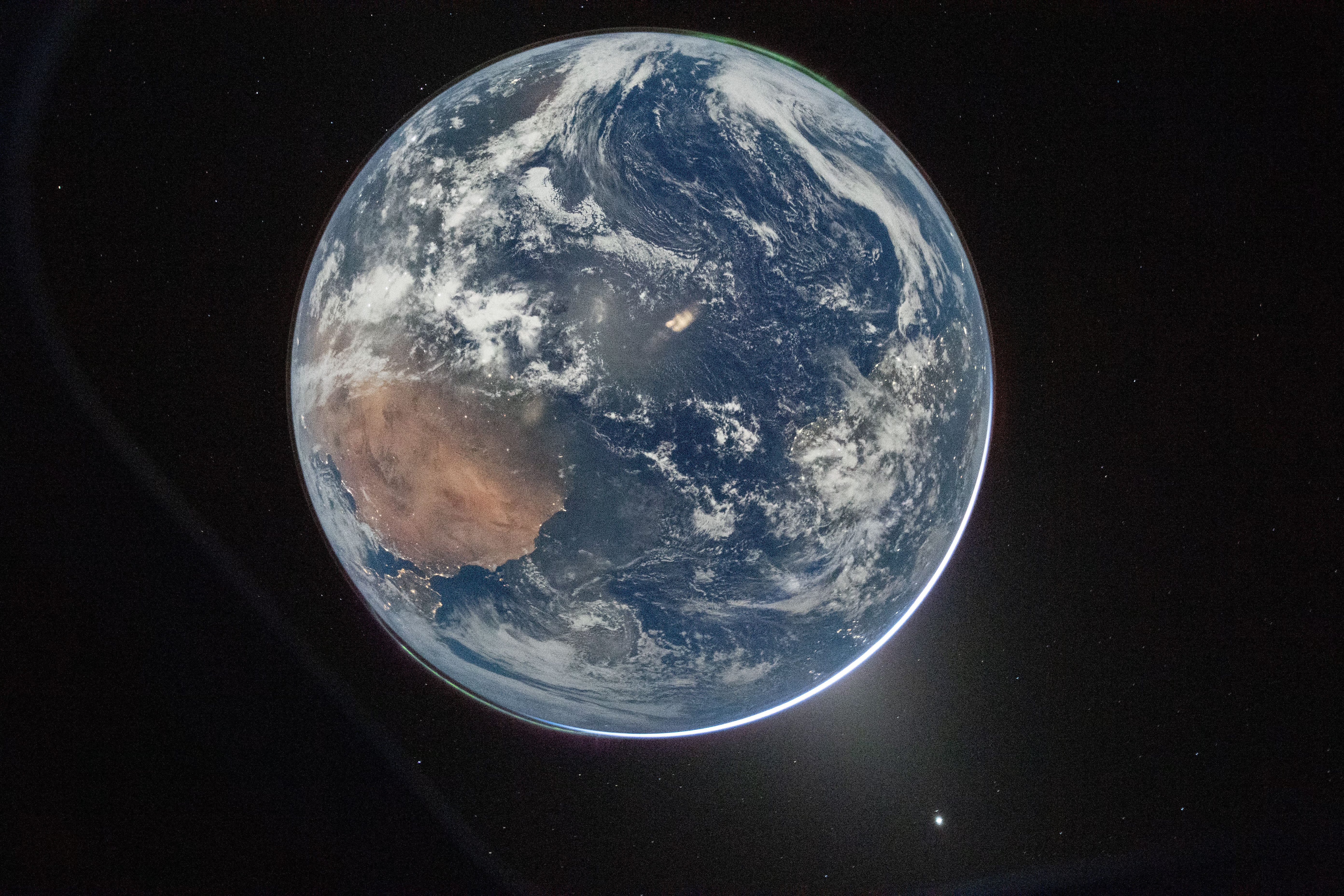
Please check out all these original NASA pics here.
I first read the story I’m thinking of in Matthew Fox’s powerful book, The Coming of the Cosmic Christ.
Fox tells the story this way:
“During the Apollo mission in 1969, astronaut Rusty Schweikert was let out of the capsule on an umbilical cord… Just as he emerged from the capsule, something went wrong within the capsule… and this left Rusty all alone floating around Mother Earth in complete cosmic silence. During this time he had two profound conversion experiences [or awakenings].
He looked back on Mother Earth, ‘a shining gem against a totally black backdrop,’ and realized everything he cherished was on that gem – his family and land, music, and human history with its folly and its grandeur; he was so overcome that he wanted to “hug and kiss that gem like a mother does her firstborn child.” Trained as a jet fighter pilot, he was a typical “macho man,” but a breakthrough of his own powers of maternity came washing over him at that moment in space…
Schweikert’s second awakening in space was a political one. He was a red, white, and blue American who believed what he had always been taught – that the world is divided between the ‘communist world and the free world.’ Yet, while floating around Mother Earth he saw that the rivers flowed indiscriminately between Russia and Europe; that ocean currents served communist, socialist, and capitalist nations alike; that clouds did not stop at borders to test for political ideology; and that there are no nations. Nations exist in the mind of the human race alone… Interdependence is what really exists.”
There are many lessons to be gleaned from this story for our time, and many messages inside these pictures. One lesson is “interdependence;” the interconnectedness of all things.
But, in the week Orion flies farther from our little blue marble than any humans, ever; we too are farther way from the concept of “interdependence” than we have been in decades.
Yesterday, the entire planet was wracked with fear of a civilizational destruction, wrought by the fascist dreams of our sitting president. He is destroying alliances and deeply damaging the trust of the world in America.
But a picture such as reminds us all: We are all tiny fools to believe we control this planet. None more a fool than that man in the White House. In the wake of yesterday’s threats to “end a civilization,” we all need the picture below even more…to realize our place in the cosmos.
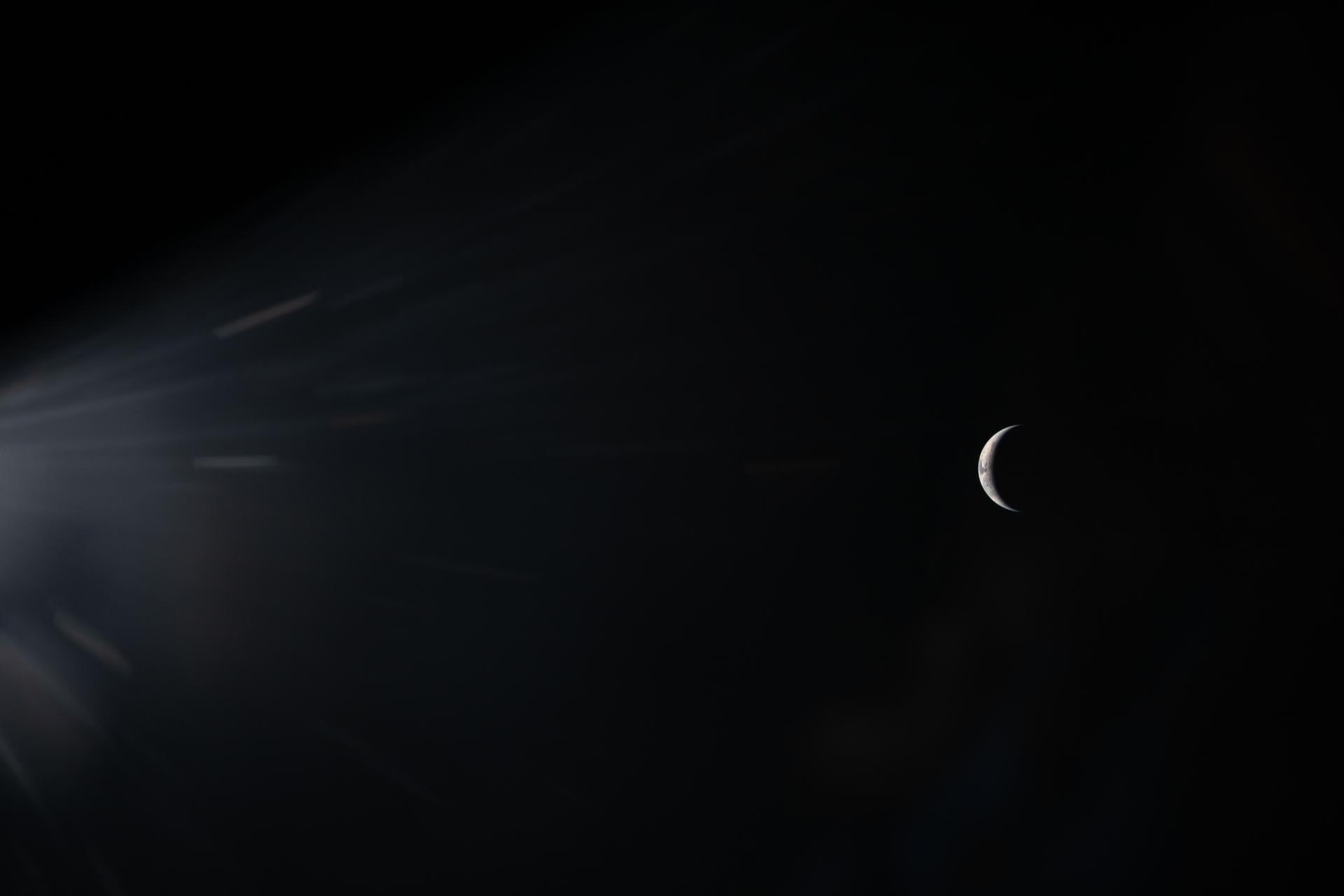
There’s a message in the juxtaposition of the anxieties we feel when we look down at our predicament, and the awe we feel when we see this picture.
When seen from the vastness of space, we are tiny dot of starlight, barely visible to the whole cosmos. Therefore, our fantasy of control of the planet is the greatest of human hubris that we recreate in every age; and we are currently being led by legions of hubristic humans all around this globe.
Perhaps it’s the inability to deal with this smallness of humanity that drives much of this? America’s “Manifest Destiny” was driven by a desire to control and conquer. And by the time we got to the Pacific Ocean…when what?
As the Eagles sang forty years ago: “There is no more new frontier, we have to make it here.”
But we seem to be forgetting this…or maybe not enough of us ever really understood this? The older I get, the more I believe that, if there is an “original sin” of humanity, it’s HUBRIS.
Hubris seems like it lurks in the shadows behind all our hyper-controlling theologies and political movements.
We are still seeking to build a tower “up” to become “god,” just like the time of Babel. And we can look at this tiny blue marble below, and either decide to double-down on control.
Or…perhaps we can simply stand in awe.
Perhaps we can be reminded of how small we are.
Faith, at its best, isn’t supposed to help us in our animalistic desire dominate. It’s supposed to help us develop our spiritual capacities for the greater spiritual gifts. The doctrine of discovery, once blessed by the Church, can now be seen to be the ultimate in our spiritual hubris.
Even the most powerful of us are invisible specs on that tiny marble in this picture below. We are fools to believe in our power.
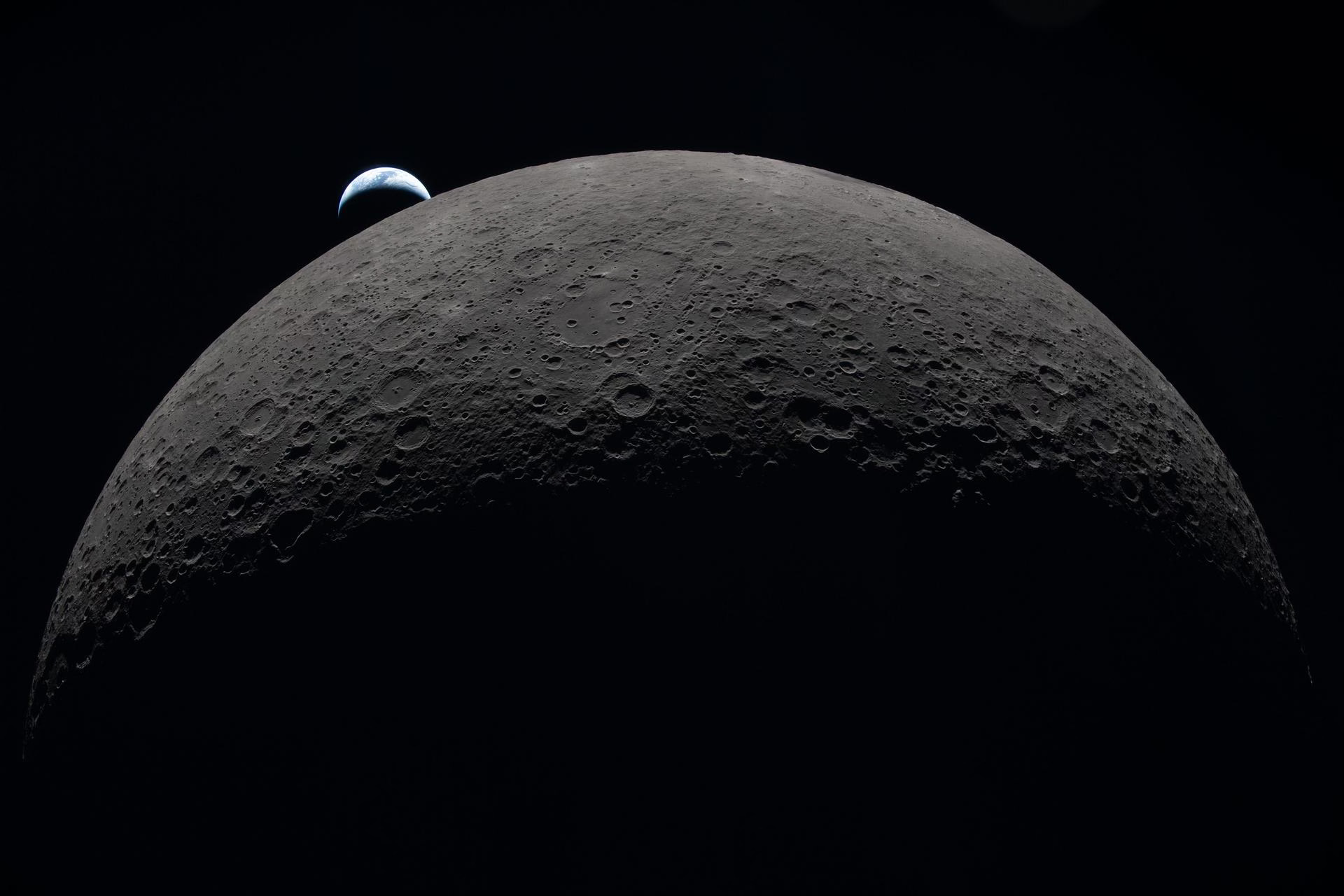
And so, awe stands ready to push us away from our hubris. Historians of religion suggest that fostering awe was one of the primary points that helps humans create their religious rituals in the first place.
Another lesson of Schweikart’s story is a reminder about my favorite Biblical word: Compassion.
But, not just compassion for individuals, but also for our entire planet and all of us tiny creatures who live here. Again, we somehow have to develop of compassion for the WHOLE of humanity, and overcome our deep tribalism. And, again, for some of us, faith helps us do this.
But I think a third powerful understanding in this story is about love, and its connections to the first two lessons. It’s about having a love for the entire beautiful whole of our broken and fractured world.
One of the most quoted verses in all of the scriptures is:
“For God so loved the world that God gave God’s only Son…”
God gave Jesus, not out of hate, or anger, of vengeance, or even to fulfill some kind of mechanistic “plan” of ritual atonement.
God gave Jesus to the world out of LOVE…for the world. Not for the world’s destruction. Not for the world’s conversion to specific religious doctrine. Not even to be killed through some predetermined plan.But God gave Jesus for the world’s own sake. And out of love.
Observers have come to describe the kinds of experiences that Rusty Schweikert had as “The Overview Effect.” In short, the effect is an experience of awe, transcendence, love, compassion and unity that comes from stepping back out of our own individual experiences and seeing the “whole.”
Dozens of astronauts have now reported this very similar experience. For many of them it has changed their lives, and they come back from their space flights committed to serve the world through various humanitarian causes.
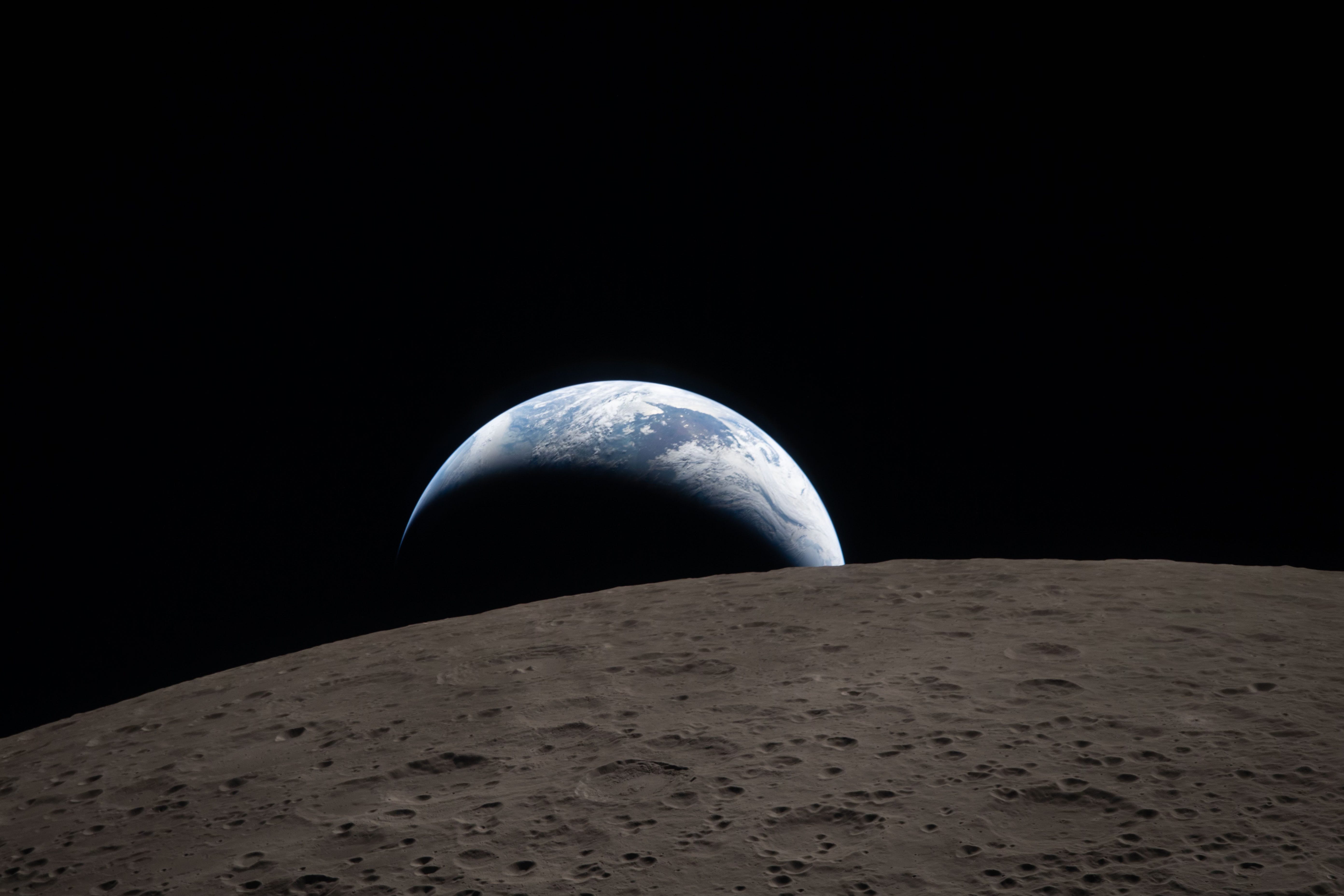
It seems to me that this famous Gospel verse is God’s own version of “The Overview Effect.”
God takes a look at the whole world…
…all of our artificial borders and divisions…
…all of our tribal natures and petty grievances…
…all of our wars and selfish greed and destruction of the world itself…
And instead of condemning us to harsh judgement…God LOVES the world, and sought to send Jesus as a way for us to overcome all of these things.
Jesus calls us to the same kind of “Overview Effect.” Jesus pushes us to step back from our provincialism and see the world as God sees it. To be awed by the world and overcome with a desire to make it a better place…to improve the lives of all God’s children.
I love this, Eric, and it is so true! Our former Presiding Bishop Michael Curry says “If it’s not about love, it’s not about God!”
Thank you. I always enjoy your essays.